
By: Alyssa Wang
Many people may know about Down syndrome and Alzheimer’s Disease, but few may know of the connection between the two.
What is Down syndrome?
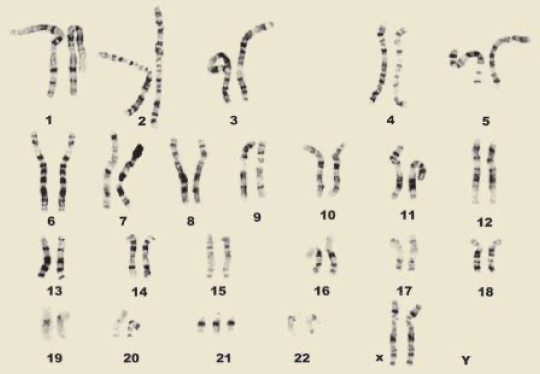
Down syndrome is a genetic condition that occurs when a person has a full or partial extra copy of chromosome 21. This usually occurs due to an error in chromosomal separation in eggs or sperm prior to fertilization. The extra copy of chromosome 21 can cause developmental problems and health issues, although conditions vary from person to person.
The most common type of Down syndrome is trisomy 21, where every cell in the body has three copies of chromosome 21, instead of the usual two. Less common are translocation Down syndrome, where an extra part or whole chromosome 21 is attached to another chromosome, and mosaic Down syndrome, where only certain cells have three copies of chromosome 21.
What is Alzheimer’s Disease?
Alzheimer’s Disease is a neurodegenerative disorder that leads to dementia, affecting memory, thinking, and behavior. In patients with Alzheimer’s, the widespread damage of neurons leads to disruptions in cell-to-cell communication and eventually cell death. This disease largely affects geriatric populations, with 10.9% of Americans aged 65+ living with Alzheimer’s.
Unfortunately, Alzheimer’s Disease has no cure, but there are available treatments that can reduce cognitive decline in people living with Alzheimer’s.
A deeper look into Alzheimer’s Disease
Scientists currently suspect that Beta-amyloid and tau proteins are the main causes of neurodegeneration in Alzheimer’s Disease.
Beta-amyloid is a smaller piece of the amyloid precursor protein (APP) found in the brain. When APP is cut incorrectly, it produces Beta-amyloid, which accumulates into toxic plaques that disrupt cells signaling and disrupt microglial cell function. Microglia cells, in turn, trigger inflammation and further damage neuronal cells.
Tau is a protein involved in stabilizing the microtubules within neurons. In the brains of patients with Alzheimer’s disease, abnormal versions of Tau separate from microtubules and bind to each other, forming threads that join to form tangles. These neurofibrillary tangles prevent proper synaptic communication between neurons.
Down Syndrome and Alzheimer’s Disease
Individuals with Down syndrome is more likely to develop dementia similar to or the same as Alzheimer’s disease as they age. In fact, 50% of people with Down syndrome in their 60s have Alzheimer’s dementia.
Current studies have shown that almost all individuals with Down syndrome over the age of 40 possess Beta-amyloid plaques and tau tangles. However, not all patients with Down syndrome showing these hallmarks of Alzheimer’s diseases develop dementia. Further research is needed to investigate why certain individuals with Down syndrome develop dementia while others display only pathology. Understanding the cause and prevalence of Alzheimer’s disease in Down syndrome could bring benefits to both the Down syndrome community and the general population.
It is important to note also that that diagnosis of Alzheimer’s is also more difficult in individuals with Down syndrome due to intellectual disabilities that may obstruct diagnoses of mental deterioration.
Causes of this correlation
One of the genes on chromosome 21 encodes for the amyloid precursor protein mentioned above. An extra copy of this gene could cause increased production of beta-amyloid and thus lead to exacerbated plaque formation.
Furthermore, adults with Down syndrome experience “accelerated aging” in their 40s and 50s, which may play a role in the development of Alzheimer’s disease in these populations.
Implications
Currently, no Alzheimer’s Disease treatments exist specifically for people with Down Syndrome, despite the disproportional levels of developing this disease. Further research is needed investigating this topic as much is still unknown about the relationship between Down syndrome and Alzheimer’s.
Works Cited
Alzheimer’s Association. “Alzheimer’s Disease Facts and Figures.” Alzheimer’s Disease and Dementia, Alzheimer’s Association, 2024, http://www.alz.org/alzheimers-dementia/facts-figures.
—. “Down Syndrome and Alzheimer’s Disease.” Alzheimer’s Disease and Dementia, 2015, http://www.alz.org/alzheimers-dementia/what-is-dementia/types-of-dementia/down-syndrome.
—. Topicsheet Betaamyloid. Mar. 2017, http://www.alz.org/documents/national/topicsheet_betaamyloid.pdf.
—. “What Is Alzheimer’s Disease?” Alzheimer’s Disease and Dementia, Alzheimer’s Association, 2024, http://www.alz.org/alzheimers-dementia/what-is-alzheimers.
National Down Syndrome Society. “About down Syndrome | National down Syndrome Society (NDSS).” Ndss.org, ndss.org/about#:~:text=and%20their%20caregivers.-.
National Institute on Aging. “Alzheimer’s Disease in People with down Syndrome.” National Institute on Aging, 30 Nov. 2020, http://www.nia.nih.gov/health/alzheimers-causes-and-risk-factors/alzheimers-disease-people-down-syndrome.
NIH. “What Happens to the Brain in Alzheimer’s Disease?” National Institute on Aging, 16 May 2017, http://www.nia.nih.gov/health/alzheimers-causes-and-risk-factors/what-happens-brain-alzheimers-disease#:~:text=In%20Alzheimer.
 Sci Insight
Leave a comment