
Introduction
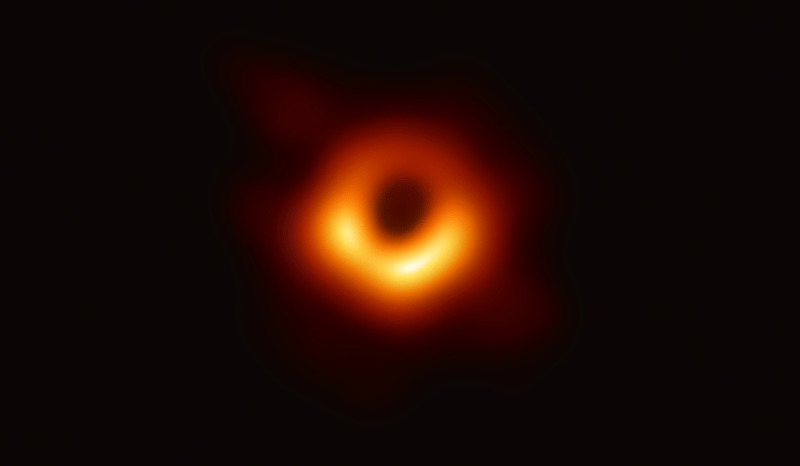
One of the most fascinating mysteries of the universe are the existence of black holes. These space objects are concentrated areas of matter that are so dense that their gravity prevents light from escaping. They form from collapsed stars and can range from a few times to billions of times the sun’s mass.
How are they detected?
Because black holes absorb all light near them, they are invisible to telescopes, making them difficult to detect. Scientists have discovered black holes largely through observing their distortion of the space around them.
As black holes have immense gravity that affects stars around them, the orbits of nearby stars can be analyzed to prove the existence of black holes. Black holes also create great ripples in space-time called gravitational waves as they move through space, which scientists can detect and analyze.
They can also distort light from distant objects. When black holes pass in front of distant stars, they magnify the stars’ light temporarily in a phenomenon known as microlensing. These changes in the space around them betray the presence of the 50 black holes scientists have discovered in the Milky Way. We currently suspect 40 quintillion black holes in the universe, a number that will only continue increasing as more stars die.
Types of Black Holes
Generally, scientists categorize black holes by mass: stellar-mass, supermassive, and intermediate-mass.
When a star more than twenty times the mass of the sun explodes as a supernova, its core collapses into a stellar-mass black hole. These black holes are often paired with another star and can occasionally pull gas off from the star to produce X-rays, which have been detected to confirm the existence of these black holes.
Supermassive black holes are black holes ranging from hundreds of thousands to billions of times the sun’s mass and are often found at the center of large galaxies. At the center of our own Milky Way is the supermassive black hole Sagittarius A*.
The lack of information about black holes has led scientists to create a third category known as intermediate-mass black holes, which are suspected to range from one hundred to hundreds of thousands of times the Sun’s mass. This unconfirmed category of black holes is still in debate as scientists have yet to discover black holes of this size.
Scientists also suspect the existence of primordial black holes formed immediately after the birth of the universe, which may have arisen from pockets of hot air dense enough for their formation. However, there has not been concrete proof of their existence.
What happens when you get too close to a black hole?
A question that has long drawn the public’s attention is what will happen when one gets too close to a black hole. Luckily, all black holes are beyond human reach. But space objects such as stars or gas might experience the drastic effects of the black hole’s immense power.
The innermost stable circular orbit (ISCO) of a black hole is the last stable orbit outside it where an object will not plunge in. Once an object ventures too close, it could start experiencing increasing gravitational pulls that will cause it to move towards the black hole.
The object begins experiencing tidal forces, which are effects by gravity on the near and far side of an object. The object eventually approaches the black hole’s event horizon, or point of no return, where not even light can escape the black hole.
Since parts closer to the black hole face much greater gravitational effects, the object begins experiencing an phenomenon known as spaghettification, which is the horizontal stretching and vertical compressing of the object due to the black hole’s immense gravity.
Another peculiar phenomenon that occurs at the edge of a black hole is time dilation, which is the changing in time experienced due to the black hole’s effects on the fabric of space-time. Time passes much slower close to the black hole than far away. An object will seem to slow to a stop as it approaches the black hole.
Once the object falls into a black hole, it becomes part of the black hole’s mass and is fixed to that location in space-time. What truly happens inside a black hole, however, is yet to be discovered by scientists.
Conclusion
Black holes are fascinating space objects that capture the thoughts and imaginations of scientists and the public alike. Despite discovering much about them in the past decades, there is still a lot scientists do not understand about them. Perhaps our exploration of black holes will one day reveal the secrets of the universe.
Works Cited
Bloomer, Ed. “What Happens If You Fall into a Black Hole?” Www.rmg.co.uk, http://www.rmg.co.uk/stories/topics/what-happens-if-you-fall-black-hole.
Cho, Adrian. “Is Dark Matter Made of Black Holes?” Science, Feb. 2017, https://doi.org/10.1126/science.aal0721. Accessed 3 Apr. 2025.
Gohd, Chelsea. “What Happens When Something Gets ‘Too Close’ to a Black Hole? – NASA Science.” Science.nasa.gov, NASA, 3 May 2023, science.nasa.gov/universe/what-happens-when-something-gets-too-close-to-a-black-hole/.
NASA. “Types of Black Holes – NASA Science.” Science.nasa.gov, 2024, science.nasa.gov/universe/black-holes/types/.
Siegel, Ethan. “There Are 40 Quintillion Black Holes in Our Universe.” Big Think, 30 Oct. 2023, bigthink.com/starts-with-a-bang/40-quintillion-black-holes-in-universe/.
 Sci Insight
Leave a comment