
By: Alyssa Wang
Introduction
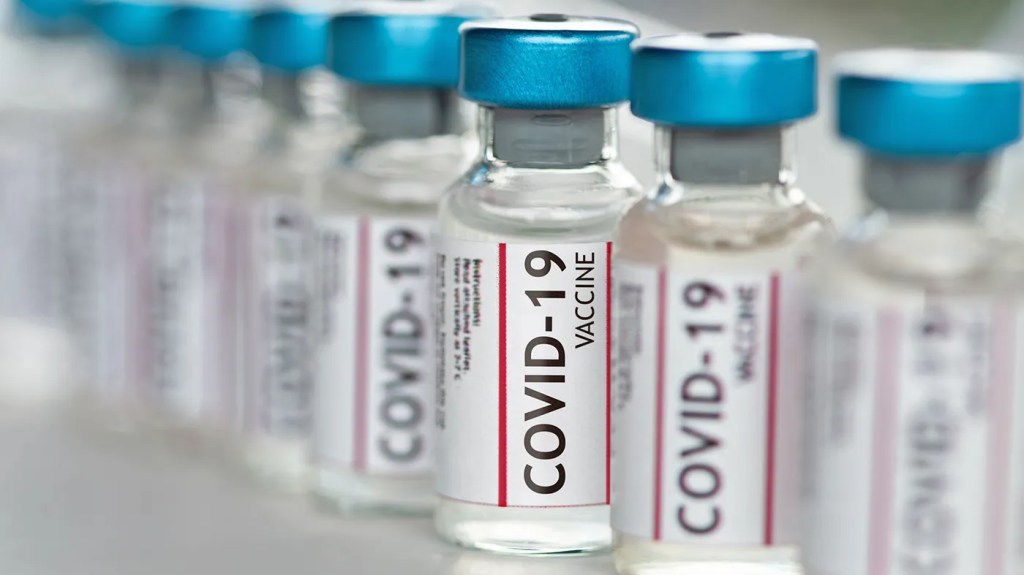
The COVID-19 global pandemic was one of the deadliest outbreaks of recent history, disrupting the lives and health of every person around the world. But one technology that transformed the course of this pandemic was the mRNA vaccine, developed within the astonishingly fast period of less than a year. In today’s article, we explore the nuances of this vaccine, delving into its history, science, and global impact.
History
Research on mRNA vaccines began at the University of Wisconsin in the 1990’s as scientists investigated immunotherapy treatments to target cancer cells. Although the first mRNA flu vaccine was tested in mice in the 1990’s, scientists faced a major challenge in delivering mRNA to cells before it would be degraded in the body. A major breakthrough was made in the 2000s as scientists developed lipid nanoparticles that wrapped around the mRNA and allowed entry into the cells. Research into mRNA’s potential therapeutic applications continued throughout the 2010’s in animal trials and early human trials with marginal success.
When the COVID-19 outbreak began in January 2020, governmental agencies soon sought out the urgent development of a vaccine. Governmental partnerships such as Operation Warp Speed in the U.S. helped expedite the mRNA vaccine research and development process. By Devember 2020, the COVID-19 vaccine known as Comirtnaty produced by American pharmaceutical giant Pfizer in collaboration with the German biotechnology company BioNTech was first to be approved for emergency use in the U.S. by the Food and Drug Administration for patients 16 years of age and older. Soon after, the Moderna COVID-19 vaccine (also known as Spikevax) was also approved for patients 18 and older.
How It Works
mRNA vaccines work by harnessing the body’s own ability to produce proteins as well as respond to infection. mRNA is a molecule that allows the body to produce proteins based on genetic information stored in the body’s DNA. The mRNA of the COVID-19 vaccine is carried into the body in lipid nanoparticles that prevent the mRNA from degrading. Once delivered to the cell, the lipid nanoparticle fuses with the cell membrane to allow the mRNA to enter the cytoplasm. There, it behaves just like any other mRNA, coding for the spike protein found on the surface of the coronavirus. The cell presents the spike protein to its surface, and pattern recognition receptors in the immune system detect this protein. The immune system produces antibodies in response to these spike proteins, allowing the body to build up long-term immunity and ensure a rapid response upon the next exposure. The mRNA message is destroyed as it is unstable and will not integrate into the host genome. mRNA vaccines have undergone intensive clinical trials for 70,000 people worldwide, with an over 94% effective rate and have been proven to protect from severe illness, hospitalization, and death.
Global Impact
The rapid and timely development of the COVID-19 mRNA vaccine drastically transformed the trajectory of the pandemic. It is estimated to have prevented 14.4 million deaths globally in the first year of its rollout, reducing deaths by 79%. By 2023, 13.6 billion COVID-19 vaccine doses were administered around the globe. It provided a gateway for the global economy to restart and gave scientists a valuable new approach to rapid vaccine development. The COVID-19 mRNA vaccine has paved the way for further technology utilizing the body’s own immune system to protect against life-threatening disease. mRNA vaccines could be potentially harnessed for other infectious diseases such as Zika, HIV, influenza and Ebola, as well as for creating immunotherapy treatments for various forms of cancer. This vaccine has had an unmatched global impact, not only transforming the way humans protect ourselves against threatening infectious diseases but also the lives of every human on this planet. Without a doubt, it has been the most surprising and impactful scientific finding in recent history.
Works Cited
“Avantor Is Setting Science in Motion for a Better World | Avantor.” Avantorsciences.com, 2025, http://www.avantorsciences.com/us/en/support/knowledge-center/history-of-mrna-vaccines.
Beyrer, Chris. “The Long History of MRNA Vaccines.” Publichealth.jhu.edu, Johns Hopkins Bloomberg School of Public Health, 2021, publichealth.jhu.edu/2021/the-long-history-of-mrna-vaccines.
CDC. “COVID-19 Timeline.” Centers for Disease Control and Prevention, CDC, 8 July 2024, http://www.cdc.gov/museum/timeline/covid19.html.
Katella, Kathy. “Novavax’s COVID-19 Vaccine: Your Questions Answered.” Yale Medicine, 5AD, http://www.yalemedicine.org/news/novavax-covid-vaccine.
Ornes, Stephen. “A Fast Track for Cancer Vaccines | Cancer Today.” Cancer Today, 23 June 2021, http://www.cancertodaymag.org/summer2021/a-fast-track-for-cancer-vaccines/. Accessed 23 July 2025.
SEP Fred Hutch. “How Do MRNA Vaccines Work?” Www.youtube.com, 5 Dec. 2022, http://www.youtube.com/watch?v=Be4GLTiawrQ.
Watson, Oliver J, et al. “Global Impact of the First Year of COVID-19 Vaccination: A Mathematical Modelling Study.” The Lancet Infectious Diseases, vol. 22, no. 9, 23 June 2022, pp. 1293–1302, http://www.thelancet.com/journals/laninf/article/PIIS1473-3099(22)00320-6/fulltext, https://doi.org/10.1016/s1473-3099(22)00320-6.
WHO. “COVID-19 Vaccines | WHO COVID-19 Dashboard.” Datadot, 31 Dec. 2023, data.who.int/dashboards/covid19/vaccines.
Yamana, Teresa K, et al. “The Impact of COVID-19 Vaccination in the US: Averted Burden of SARS-COV-2-Related Cases, Hospitalizations and Deaths.” PLOS One, vol. 18, no. 4, 25 Apr. 2023, pp. e0275699–e0275699, https://doi.org/10.1371/journal.pone.0275699.
 Sci Insight
Leave a comment